
The Onion is the Kitchen
Share
As you start your culinary career, you will notice that onions are used in almost everything you cook. Indeed, there is a saying, “The onion is the French kitchen”, and it's true, the humble and cheap onion is a foundation ingredient and one that aspiring chefs need to take the time to understand what it brings to a dish. Onions are so important in French cuisine that their national dish is the famous French Onion Soup.
Why are onions so important?
Onions have a unique ability to change character when cooked. Raw, they are sharp and pungent. Slowly cooked, they become sweet, soft, and deeply savoury. And when slowly caramelised, they develop a sweet umami flavour that can be used to build complexity into a dish and especially a sauce. This transformation is at the heart of countless dishes. Whether they are sweated gently, caramelised over time, fried until crisp, or melted into a sauce, onions add depth, balance, and complexity.
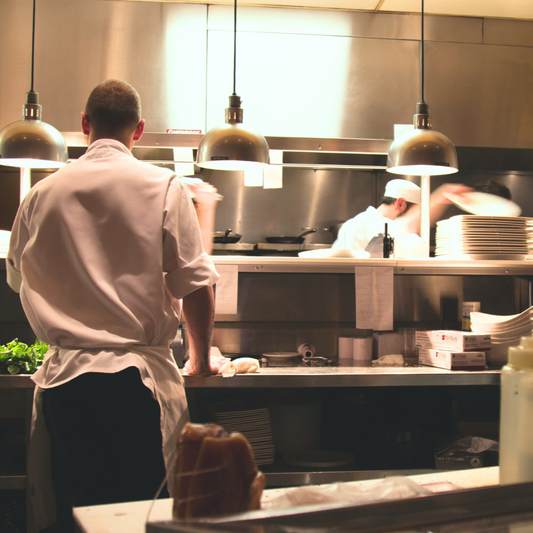
In professional kitchens, onions are rarely the “star” of the plate; you don’t normally taste a dish and go, “Mmm onions”, but they are almost always working quietly in the background, supporting everything else. Stocks, soups, sauces, braises, curries, stir-fries, stews, and fillings nearly all begin with onions.
The onion family is also bigger than you think.
- Brown/white onions – The standard onion used for stocks, casseroles and sauces
- Red onion – Mild, crisp and sweet, used raw in salads
- Spring onions – Green, mild and sweet, used in salads and stir-fries.
- Shallots – Small and mild, with a delicate flavour used in delicate sauces and salads
- Leeks – Mild and earthy, used in soups and as a vegetable side dish
- Garlic – Strong and pungent smell, used in many, many dishes and stir-fries
- Chives – Soft green stalks used fresh as a herb
- Pearl onion – Use whole in braised dishes as an ingredient garnish
For aspiring chefs, onions are also a key training tool; you will spend a lot of time peeling and cutting onions. Learning how to dice, slice, julienne, or brunoise an onion properly builds knife confidence and accuracy. Understanding how different cuts affect cooking time and texture is a fundamental professional skill.
Professional cookery is built on strong foundations. Chefs who understand ingredients, not just recipes, cook with confidence and adaptability. Onions teach flavour development, technique, patience, and respect for process. They remind cooks that great food doesn’t start with complexity; it starts with doing simple things exceptionally well.
If you want to become a chef, start by mastering the basics. And there is no better place to begin than with an onion.