
Why French is the backbone of professional training around the world.
Share
Why is French cookery the basis of culinary training?
French cooking techniques form the basis of modern professional culinary training and are widely regarded as the foundation of international cookery. There are specific culinary cuisines such as Indian, Chinese, Italian and Mexican which are well respected, but training in French cookery techniques provides chefs with a worldwide system of cooking that can be, and is, used all over the world, at all major hotels, on all cruise ships, and in all restaurants serving European-style food.
Culinary students in Australia study French Cookery, Culinary students in the UK study French Cookery, Culinary students in the US study French Cookery, and culinary students in Europe study French Cookery. So, if you aspire to be a chef, then you too will need to study French cookery techniques, learn some basic French cookery recipes and learn French Cookery terminology.
Why?
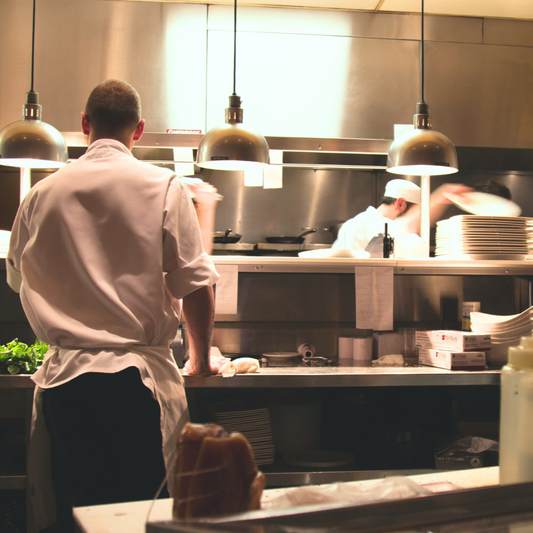
The French chef August Escoffier (1846-1935) is credited with updating and documenting traditional French cookery methods to form the basis of modern European cookery. Much of this work was based upon previous methods by French chef Marie-Antoine Carême (1783-1833). But it was not just cooking techniques that Escoffier modernised and documented, he also developed kitchen management into separate sections like the sauce section, the grill section, the cold section, the vegetable section, the fish section, the dessert section and so on. Large modern kitchens are still set up in this way all over the world.
These techniques are not just about creating French dishes, at the core of French culinary education are fundamental methods such as sautéing, roasting, braising, poaching, and grilling, each of which teaches chefs how to control heat, develop flavour, and achieve the correct texture. Mastering these techniques ensures that chefs understand the science of cooking, from how proteins react to heat to how sauces thicken and flavours unite.
Another key element is the French approach to sauces and stocks, which are often called the “mother sauces.” Learning how to prepare these classic sauces—béchamel, velouté, demi-glace, hollandaise, bearnaise and tomato—gives chefs a foundation for creating countless derivative sauces and flavour combinations, making them adaptable in any international kitchen.
In short, French cooking techniques provide a structured framework that trains chefs to understand ingredients, control cooking processes, and present dishes in a modern appealing manner. This foundation provides a universal language of professional cookery a chef trained anywhere in the world can use and communicate with other chefs in the kitchen.
So, if you aspire to be a chef cooking international cuisine and have job opportunities all over the world, you start with French culinary training and then develop your career.
#culinarysolutionsaustralia, #culinarysolutionsacademy, #chefslife, #chefstraining www.culinarysolutions.com.au